
Buying Land to Build a House
Buying Land to Build a House
Every parcel of land is unique. Evaluating its potential takes time, effort, and careful exploration. Below is a streamlined overview of the key steps and considerations we use when assessing land for a new home build.
Start with the Land—Not the House Plans
It’s natural to be excited about designing your future home, but resist the urge to start planning before securing the land. The characteristics of a property—its topography, views, access, privacy, and local regulations—play a crucial role in determining the layout and design of your home.
Before purchasing, consider:
- What area of the site offers the best views?
- Where is access easiest?
- Is there space for a pool, barn, or guest cottage?
- Will tree cover enhance privacy or block views and sunlight?
- Will the county allow building on this land?
These questions are foundational and should be answered before you begin design or make a purchase.
Steps to Purchasing Land
1. Scout the Property
See it in person. Online listings can be misleading—photos may hide unsightly surroundings or exaggerate views. Drive the area, walk the land, and if possible, talk to the current owner, realtor, or neighbors for additional insight.
2. Negotiate Purchase Terms
Agree on the sales price, earnest money deposit, and a due diligence period. This timeframe allows you to research the land while securing your right to purchase. Without this step, you risk losing the property to another buyer after investing your time and resources.
3. Conduct Due Diligence
At a minimum, this should include:
- A boundary survey
- Evaluation of setbacks and easements
- Septic and well testing
- A title search
Your goal is to confirm that the land is suitable for your intended use. For example, if a percolation test—used to determine how well the soil absorbs water—shows the property only “percs” (or supports) a 3-bedroom septic system, but you plan to build a 6-bedroom home, that could be a dealbreaker. Also consider region-specific concerns, such as mineral rights in mining areas or flood insurance requirements. Every property has unique conditions that require careful research.
4. Close the Sale
Only proceed to closing once you’re fully confident in the results of your due diligence. Don’t let pressure from a seller or timeline force you into a premature decision. Closing dates are often flexible and can be adjusted to allow more time for research or to resolve outstanding issues.
If everything checks out, and you’re ready to move forward, consider the potential advantages of a cash purchase. Sellers may view cash buyers as more reliable, which can strengthen your negotiating position. Additionally, owning the land outright can simplify the process of securing a construction loan, as lenders generally prefer lending against unencumbered property.
Scouting the Property: What to Look For
Land Features That Add Value
- Views: Scenic vistas enhance enjoyment and resale value.
- Water: Ponds, lakes, or streams that are visually appealing add significant value.
- Mature Trees: Provide privacy, shade, and visual appeal.
- Convenient Location: Proximity to shopping, dining, and amenities is a plus.
- Utility Access: Utilities near the build site reduce infrastructure costs.
Land Features That Detract from Value
- Steep Slope: Building on steep land is more expensive and often restricted. In Albemarle County, check the Critical Slope map online to see where building may be limited. Most counties offer similar GIS tools. Understanding slope early helps avoid costly surprises.
- Power Lines: Can negatively impact resale.
- Railroad Tracks: Noise and safety concerns can be a drawback.
- Streams or Wetlands: May involve environmental restrictions and costly crossings.
- Flood Plains: Limit buildable areas and often require flood insurance.
- Lack of Privacy: Views into neighboring properties reduce desirability.
- Night Light Pollution: Bright surroundings can affect quality of life.
- Noise & Odors: Proximity to highways, farms, or industrial areas can diminish value.
In-Depth Due Diligence
Hire qualified professionals to help assess the property.
- Survey: Always get a new, professional survey. Inform the surveyor that you plan to build soon—ask them to include house location services.
- Utilities: Determine distances to water, electricity, and gas lines. The farther they are, the more expensive the connection.
- Septic System: Conduct a perc test to evaluate feasibility and location.
- Driveway: Long driveways can significantly increase development costs.
- Trees: Get estimates for clearing. Keeping the wood for firewood may offset costs on large parcels.
- Dirt & Rock: Excavation may produce large amounts of dirt or hit rock, both of which can be costly to move. If the lot is large, on-site reuse may be an option.
Pro tip: Avoid relying solely on seller-provided documents. Your own inspections and surveys are crucial.
Topography and Slope
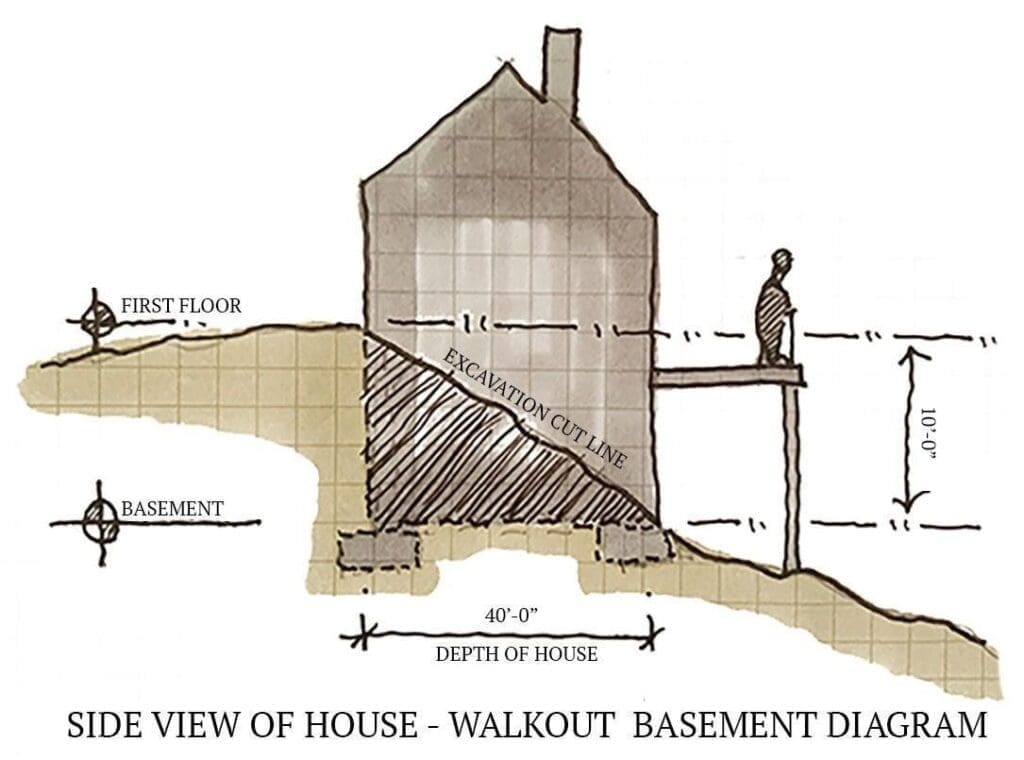
Topography has a direct impact on design, cost, and feasibility. Steep lots are more expensive to build on and can hide beneath forest cover. Walk the site and measure elevation change across the proposed building footprint. A quick estimate to evaluate land is to measure back on the site 40’, stand at the bottom, and see if the land is above your eye line. If so, you know it’s falling more than 5’ or so.
A general rule: if the land drops more than 10 feet over the depth of your planned house, expect higher foundation costs.
Gently sloping lots (3–4 feet of fall) may support a walkout basement with minimal grading. Steeper slopes (10–25 feet) can drastically raise construction costs.
Final Thoughts on Buying Land
Finding the right land is an exciting and rewarding process—but it requires diligence. Protect your investment by doing your homework. Assess the land thoroughly, understand the limitations, and surround yourself with professionals who can help you make informed decisions.
Our team of experts can help you scout the perfect plot of land to build your dream home. Get in touch with us!
